3 Ways Externships Invigorate STEM Learning
Posted on
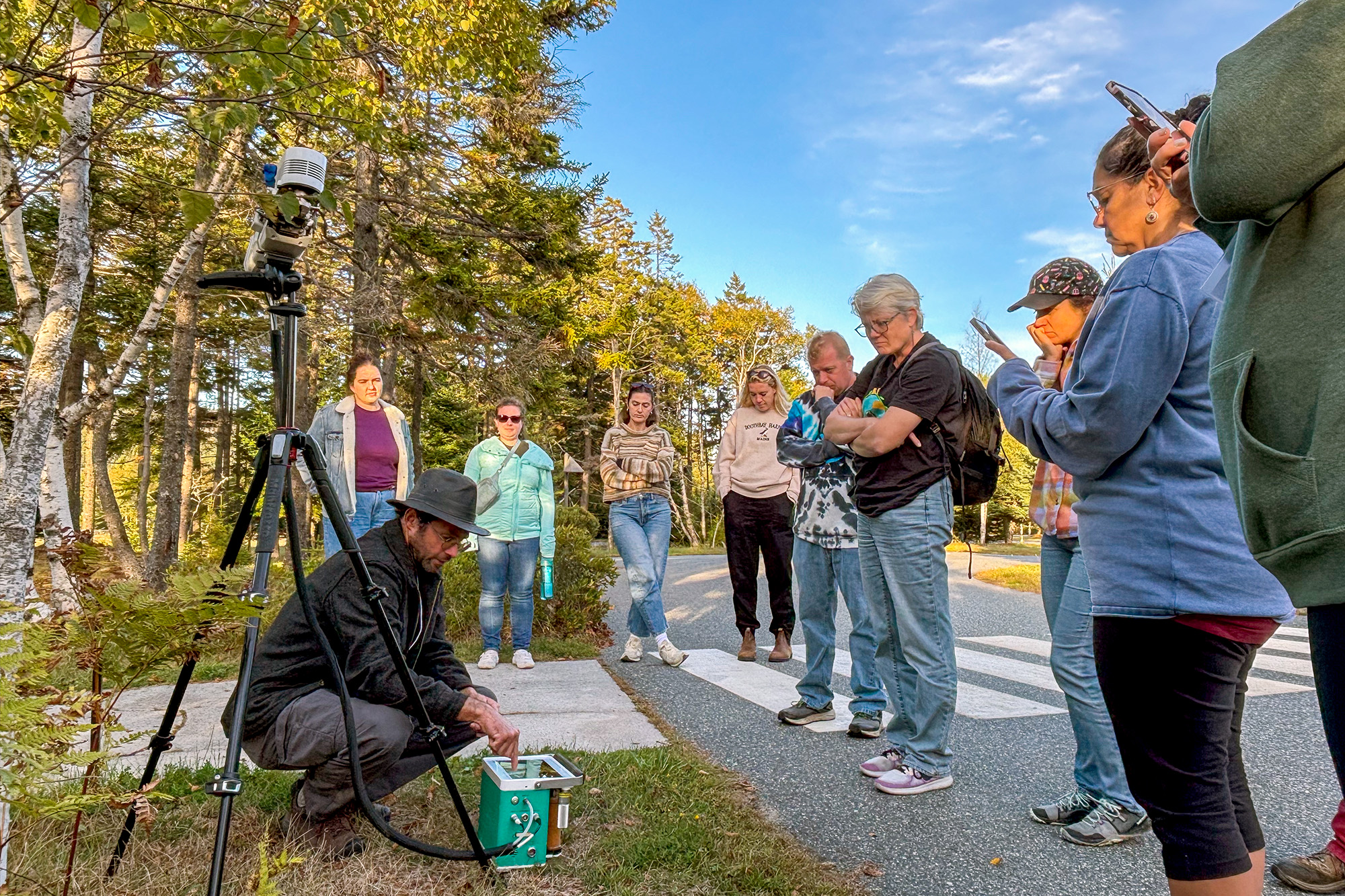
From September to December 2025, teachers participating in the Maine-Bridge project developed lesson plans and activities based on their ten-day summer externship experiences where they were matched with in-state STEM researchers or scientists. Each externship provided a $1,200 stipend, up to 110 contact hours, support from a cohort of peers and MMSA staff, a curriculum writing retreat, and mentorship experiences. Teachers were also encouraged and given support to guide student projects for the Maine State Science Fairs.
This post breaks down some of the key takeaways from the past year to show how giving teachers firsthand experiences with scientists translates into engaged learners, excitement around STEM, and new opportunities.
1. Teachers—and Students—Gain Relevant, Contextualized Insights
Many of the 2025 Maine-Bridge participants commented on the immediate impact of their experiences upon returning to the classroom in the fall.
Melissa Luetje, a physical and life sciences teacher at Freeport High School, noted that their mentor went above and beyond to help her class understand data collection protocol and experimental design. “Students find this type of immersive work authentic, valuable, and are invested in it because their findings are being used in a real-world way. They are contributing to their community in a truly meaningful way.”
2. Mentorship Refreshes Appreciation for Science and Learning in Community
“I thoroughly enjoyed being out on a boat in the ocean in the summer, and meeting the boat captain and other researchers at the University of New England. I found several specific content areas where I can use my experience to enhance my teaching…[including] showing students that Maine is a great place to be a scientist!” Mt Abram High School life and physical science teacher Brandy Tanner said. “It was a great reminder that science is a process that takes time, and that the scientific community is vast and worldwide. Working with scientists and educators was awesome. Teachers don’t get to spend a lot of time working with other adults. Even working with the college students was a reminder of how we all support each other.”
Delving into science through fieldwork and hands-on research has not only been invigorating for teacher participants, but the knock-on effect is that these experiences translate into student enthusiasm as well. For example, eight of the 17 Bridge teachers from year one have registered their schools for the Maine State Science Fair or the Maine Middle School Science and Engineering Fair so far, four of which have never participated in the fairs before. The science fairs provide middle and high school students with the opportunity to pursue their interests in science and engineering, and present results of their projects to fellow students and expert STEM professionals.
3. Connections Open Up New Opportunities for Further Science Immersion
Teachers planned to enhance their students’ education in a variety of ways, including using new techniques and tools in the classroom, integrating their experiences into the curriculum as real-world applications of learning, and planning field trips to research facilities.
“This experience has contributed to my ongoing shift toward integrating more project-based learning and inquiry-based learning in my classroom,” Sean Donovan, a high school math teacher at the Brewer School Department, said, adding that he is now planning yearly field trips to the University of Maine Innovation Center and the Advance Structures Center.
Maine-Bridge is part of Maine-SMART, a statewide collaborative project funded by Maine-EPSCOR and NSF EPSCOR. For more information about getting involved, visit the Maine-Bridge webpage.