Article Details Three Lenses for Recognizing Play-Based Science
Posted on
MMSA staff recently co-published an article in Science & Children titled “Seeing Science Through Play: Three Lenses to Enhance Early Learning.”(opens in a new tab) The article, which is now available online, details how early childhood educators can identify scientific practices embedded in children’s everyday play activities.
This work comes directly out of MMSA’s SciEPlay project, a four-year collaborative research partnership with Bowdoin College and Samara Early Learning, funded by the National Science Foundation (NSF).
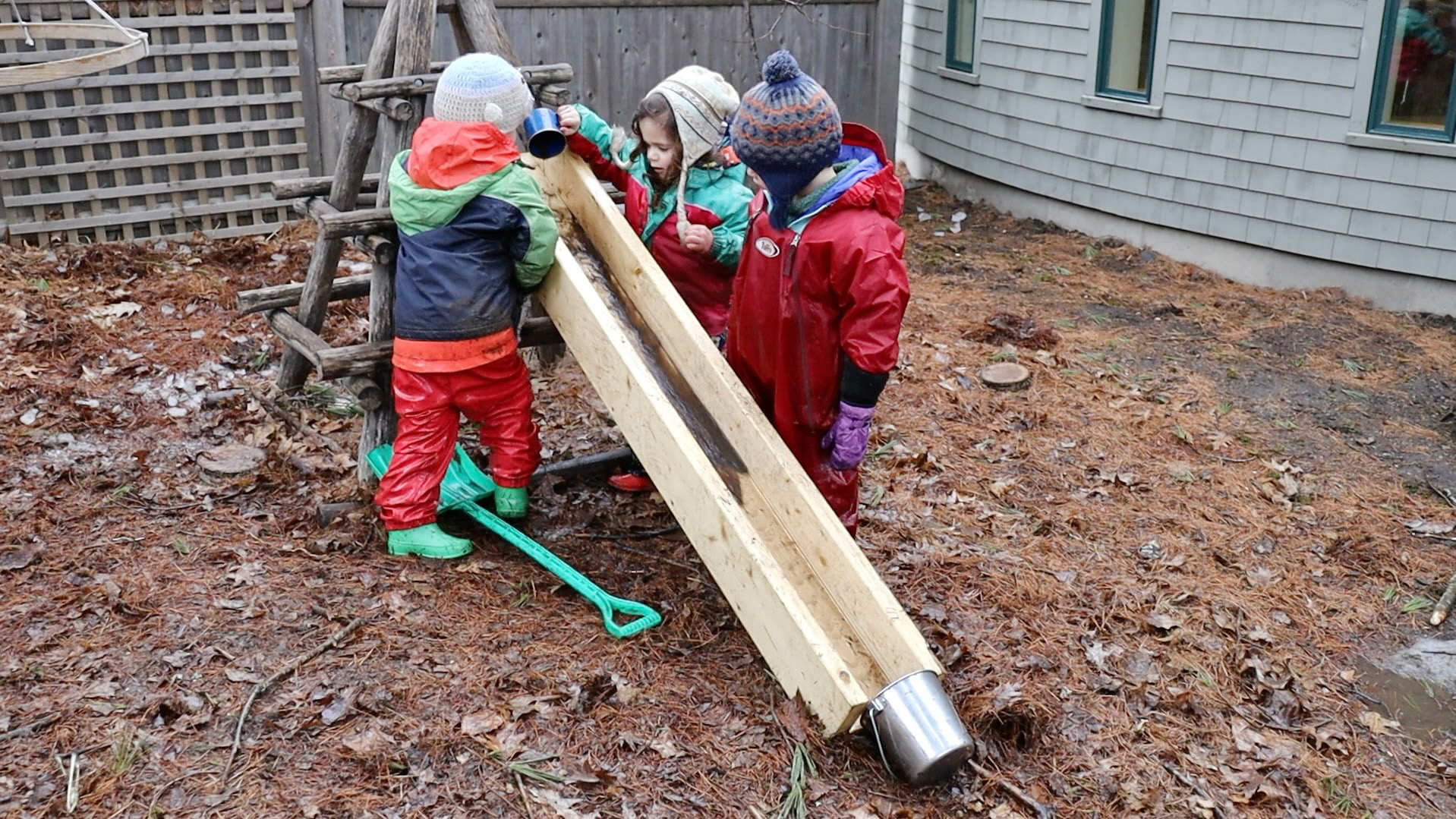
The article introduces a practical framework consisting of three lenses—actions, exploration, and environment—designed to help educators observe and document science learning in play. By applying these lenses to a series of play-based scenarios, the article provides clear examples to help teachers notice and explain scientific thinking and practices inherent in children’s self-directed play.
The core idea illustrated by this article and the SciEPlay project is a powerful one: Young children are natural scientists and engineers, eager to explore: “How? Why? What if?” Through self-directed play, they intuitively engage in scientific practices such as asking questions, analyzing data, and designing solutions. In this way, scientific inquiry and investigation are natural and continuous outcomes of play. This framework helps educators recognize, value, and build upon children’s innate scientific tendencies.
“Early childhood educators already know that play is ‘good’ for children. From firsthand experience, they know that it supports children’s growth, physical development, and social-emotional skills. This project helps them recognize that play is also a powerful pathway for early science learning. SciEPlay equips teachers with tools and strategies to support play-based science and engineering within their unique context, empowering them to follow children’s lead and cultivate their curiosity.” – Maranda Chung, SciEPlay Project Lead
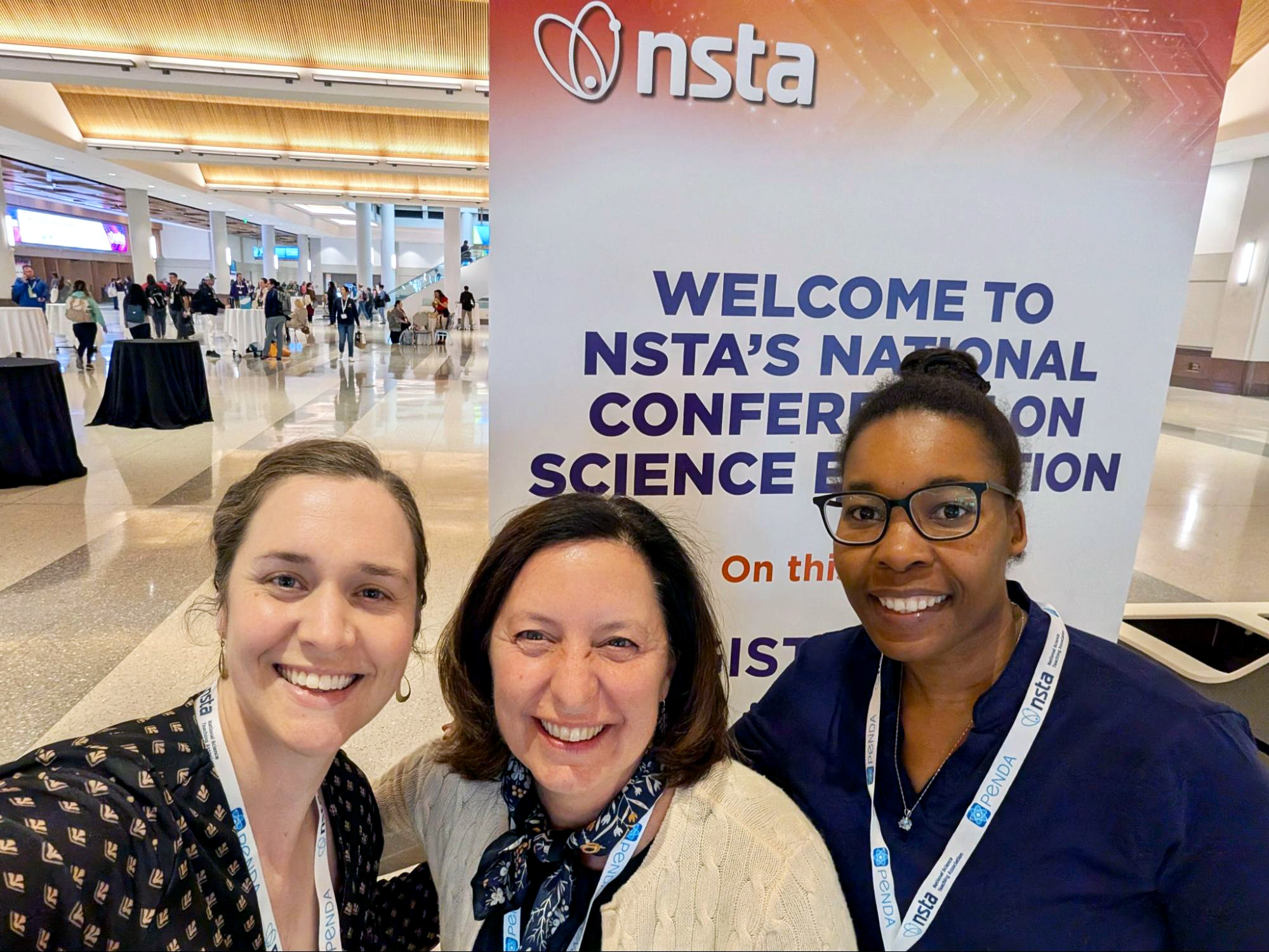
To date, the SciEPlay team has authored three articles in Science & Children and presented at more than 20 conferences, including those hosted by the National Science Teaching Association (NSTA) and the National Association for the Education of Young Children (NAEYC). For a complete list of SciEPlay publications and presentations, please visit our website(opens in a new tab).
SciEPlay will be releasing a comprehensive suite of open-source, professional learning materials in 2026, including sessions, videos, handouts, and more. To stay informed about these resources and future publications, please join our mailing list(opens in a new tab).
This project is funded by the National Science Foundation, grants #2201673 and #2201674. Any opinions, findings, and conclusions or recommendations expressed in these materials are those of the author(s) and do not necessarily reflect the views of the National Science Foundation.
 Maranda Chung
Science Programs Team Lead