“Connecting to Our Local Phenomena”: An Interview with Sensemaking about Place Teachers
Posted on
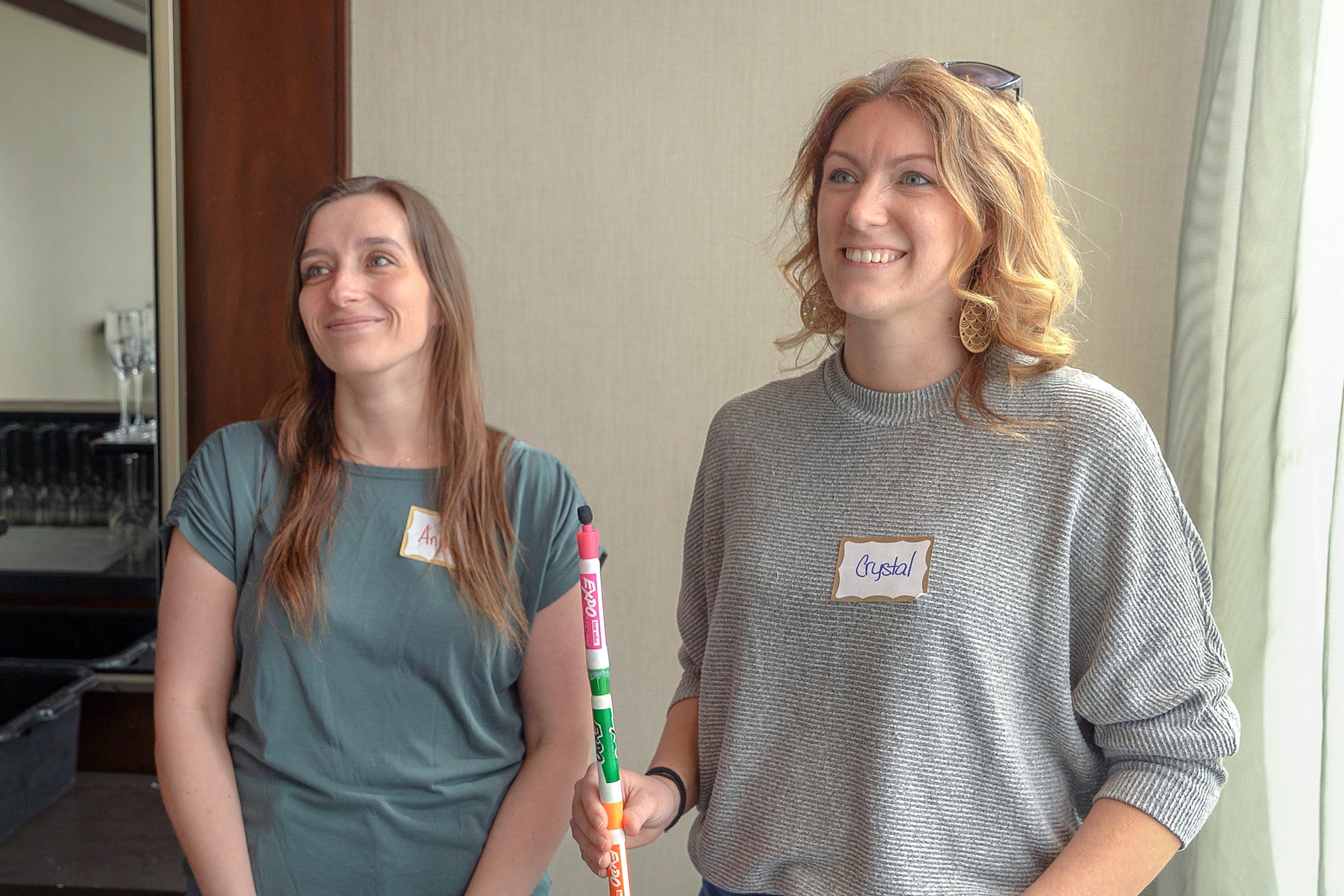
Sensemaking about Place (SaP) is a project that equips educators with science curriculum developed as part of the PeBLES2 project, which is designed to be adaptable to local contexts and phenomena. The project began last year, acquainting teachers with the existing materials they would adapt and build from. With SaP participant teachers heading into the second half of the academic year, MMSA caught up with two educators, Thomaston Grammar School fourth-grade co-teachers Anna Cosgrove and Crystal Baughman, to hear about how the project is going and what they are working on with students.
What have you been working on recently?
Anna: We’re actually starting a unit right now on animal and plant adaptations. And we are going to make sure we include some local phenomena such as pollinators, and we would like to really focus on honeybees as well.
Crystal: And we also hope to integrate that with native plants. And so having the kids build—or create—a garden, like a pollinator garden and then hopefully they get to also dig and plant in that pollinator garden.
What has it been like working on this project? How does it inform what you are doing in the classroom?
Anna: This fall we started working with the SaP team during some workshop days. And a lot of the things that they were teaching us were how to think about structuring our lessons. For instance, making sure that we use a driving question board. The kids really do a lot of the thinking before you actually give them any information.
Crystal: We’ve also talked about how to disagree with somebody and how to build off of that, and that’s been a really big thing we’ve taken from this experience with MMSA and working with the SaP team, and that’s followed through in all of our other areas academically. So now they’re taking that talk into literacy and into math. And that’s been really great to see.
Can you tell us a bit more about driving question boards?
Anna: The boards are a place where, when we start our anchoring phenomena, we’re trying to think, “Okay, right now we are trying to figure out how do animals survive” with our animal and plant adaptation unit, and so the kids are coming up with all of their different questions. How do sloths survive when they’re so slow and they can’t move very fast, but they’re actually a really good survivor? And then they come up with all of these different questions that we don’t even necessarily have answers to yet. And as they’re answering the questions, we get to take them off the board because it’s taking their own ownership and saying, “Okay, we’re learning, and we’re driving our own learning.”
Crystal: It’s really fun. We give them a bunch of stickies and they get to write their questions, and then we’ll put them all over the board. And they love that. And we’re also recording their thoughts. So we gather questions like, “What do we know about __?” Whatever it might be. “What do we think we know, what are we wondering about it?” And then they get to kind of collaborate and then make their own board.
Anna: This fall, when we did MMSA’s PeBLES unit that had been created already, we utilized all of these different pieces, like the driving question board. It’s the kids basically compiling all of the information they’re learning, and we put it all in one place so that they’re able to see all the things that we’ve discovered so far.
And then we also include related phenomena as well. So like, as they’re relating to things that happened in our own community, we can make sure to also have a place to record that. So it was really awesome that the one we did this fall, that was part of the PeBLES unit, I went to take it down one day and the kids were like, “No, don’t do that!”
And so we actually kept it up right until we started our next unit with the animal and plant adaptations, because they felt so, I don’t know, part of it. It was really important to them.
Crystal: Something that I loved was when we started this, we got to learn a lot about the kids because they answered questions about their interests, like, “What are places outside that mean the most to you?” And we did that within the first couple of weeks of school. We really were able to make connections to the kids a lot faster than maybe in the past without some of that background. And then they would go home and talk to their grown ups and then come back and give us information, and we got to have pictures of all the places the kids love. So that’s a part of the classroom now. So it just gives them that sense of community and having that in their classroom
What is coming up next for you with this project?
Anna: Right now we are diving deep into this animal and plant adaptation unit. We’re trying to connect what we learned this fall with the PeBLES unit to what we’re teaching now.
And so I think the biggest takeaways that we have from that first unit are to make sure we are including a driving question board, make sure that these kids are taking ownership of their learning, and connecting it to our local phenomena. We want to know what’s happening in our own community that’s important to these kids and is going to pull their interests.
Crystal: In the last unit we did, we got to talk about the Rockland Breakwater. And so that was our local phenomena. And then they went home and talked to their parents and had so many stories that they brought back to the classroom and shared with us. And that was really exciting just to see all that connection happening.
Anna: One of the different things we looked at in the PeBLES unit was about glaciers and how they move. And so how you can actually look at rocks—and there’s like a field of rocks that we look at—and we try to figure out, “Why is there a field of random rocks?” And so you can actually even look and see lines on them to see the ways the glaciers were moving. And that brought us to another local phenomenon we know about on our trail system in the Thomaston Town Forest. And we found this giant rock. It’s called split rock. And so a lot of the kids have been there and they’ve climbed on it, and there’s a giant split down the middle. And we could talk about, “Okay, why do you think this rock is here? What happened? Why is there a big split in it?”
You mentioned students learning to disagree; what does that look like?
Crystal: So for instance, somebody might say their theory or their answer and then somebody else might disagree or want to build off. And so they might say, “Anna I like what you said, but I disagree because…” And then it gets them explaining their thinking. Or they might say, “Oh, I really enjoyed that. I’m going to add to it.” And so it’s just this conversation that keeps building.
Anna: It’s actually a really common thing we use in a lot of different subject areas. But in science, we tend to call it, “science talk moves.” It’s just a format that we learn and it’s a way to respectfully agree or disagree with others, and then also be able to make sure you’re actively listening, because then you could restate what the other person said and either add to it or share your disagreement. It also helps you to know that they’re paying attention and listening to what their classmates are saying.
Anything else you want to add?
Anna: I have really enjoyed being a part of the Sensemaking about Place project. Danielle and Kim, they’ve been so wonderful to us, and they really have made us feel like we’re part of a team, that we’re important, that our voice is heard. And the fact that they want to keep connecting and make different connections is great. And, you know, Danielle was talking about other projects she has going on and ways that we can make change. So that’s been really cool.
Crystal: Yeah. And I would echo the same thing. They’re just so welcoming. They make you feel heard. It’s been really exciting to work on the project.
As the SaP project progresses, MMSA will continue to share the progress participating students and educators make in adapting phenomena-driven materials to their local contexts and taking ownership of their place-based coursework. Check out the project page to learn more about SaP, and for more information about the free, publicly accessible, adaptable curriculum mentioned in this post, see the PeBLES2 resources page.