How Students are Learning to Connect Math and Energy in Rural Maine
Posted on
This post is part of a series exploring how the Rural Energy Futures project engages Maine teachers, students, and energy industry professionals to explore energy transition topics and develop integrated curriculum.
Creating curricula that helps students understand how the world works is challenging. For one thing, hot-button topics like energy efficiency are complex. As technology advances, the way things were done yesterday may be outdated tomorrow. A textbook description of how energy is generated, transmitted, and paid for from only a few years ago would be woefully inadequate to the task of bringing students up to speed on this topic today.
This is why teachers in MMSA’s Rural Energy Futures project have worked side by side with students and energy industry mentors to design learning materials that teach math through examples chosen from students’ own community experience. At the same time, students engage with the fundamental building blocks of math, learning how to apply evergreen principles to the problems of today in anticipation of the rapidly evolving future.
This blog post provides a few examples of how two classes in the REF project are highlighting pressing questions about the present—and future—of energy in Maine.
Investigating Home Heating Data at Bonny Eagle Middle School
Pam Alexander’s eighth-grade math class was digging into energy usage in home heating. Students reviewed cost-per-BTU data from the past five years and compared that to their home heating systems, including wood stoves, heat pumps, and baseboard heating. Students worked to not only analyze but also visualize data, interpreting their results and using examples and assistance from their teacher to ensure their conclusions were supported by the data.
Projecting the Impact of a Wind Farm at Telstar Middle School
Students in Peter Hedden’s eighth-grade science class were prompted to consider how the construction of a hypothetical wind farm could economically affect their community. Students used a worksheet that provided figures for the costs of things, such as energy bills, and electricity rates for conventional and wind-generated power. Over two class periods, students worked together in groups to consider the wider implications of wind turbines on both the local economy and the environment. Ultimately, students had to decide whether they would elect to have wind turbines built near their homes.
This activity was bolstered by online tools, including CODAP, a data analysis app, that students used to support their conclusions. Not only were students learning about cost-benefit analysis and how to apply that knowledge, but they also gained insight into how decisions are made and the impacts of those decisions on their communities.
Exploring Scientific Research and Engineering at University of Southern Maine
Another facet of the Rural Energy Futures project is the support that research and industry organizations provide to these students and their teachers. The same Telstar eighth graders who worked on the wind energy activity recently traveled to the University of Southern Maine Engineering Department to tour the John Mitchell Center’s main lecture hall, the thermodynamics and fluid-mechanics laboratory, and the machine shop.
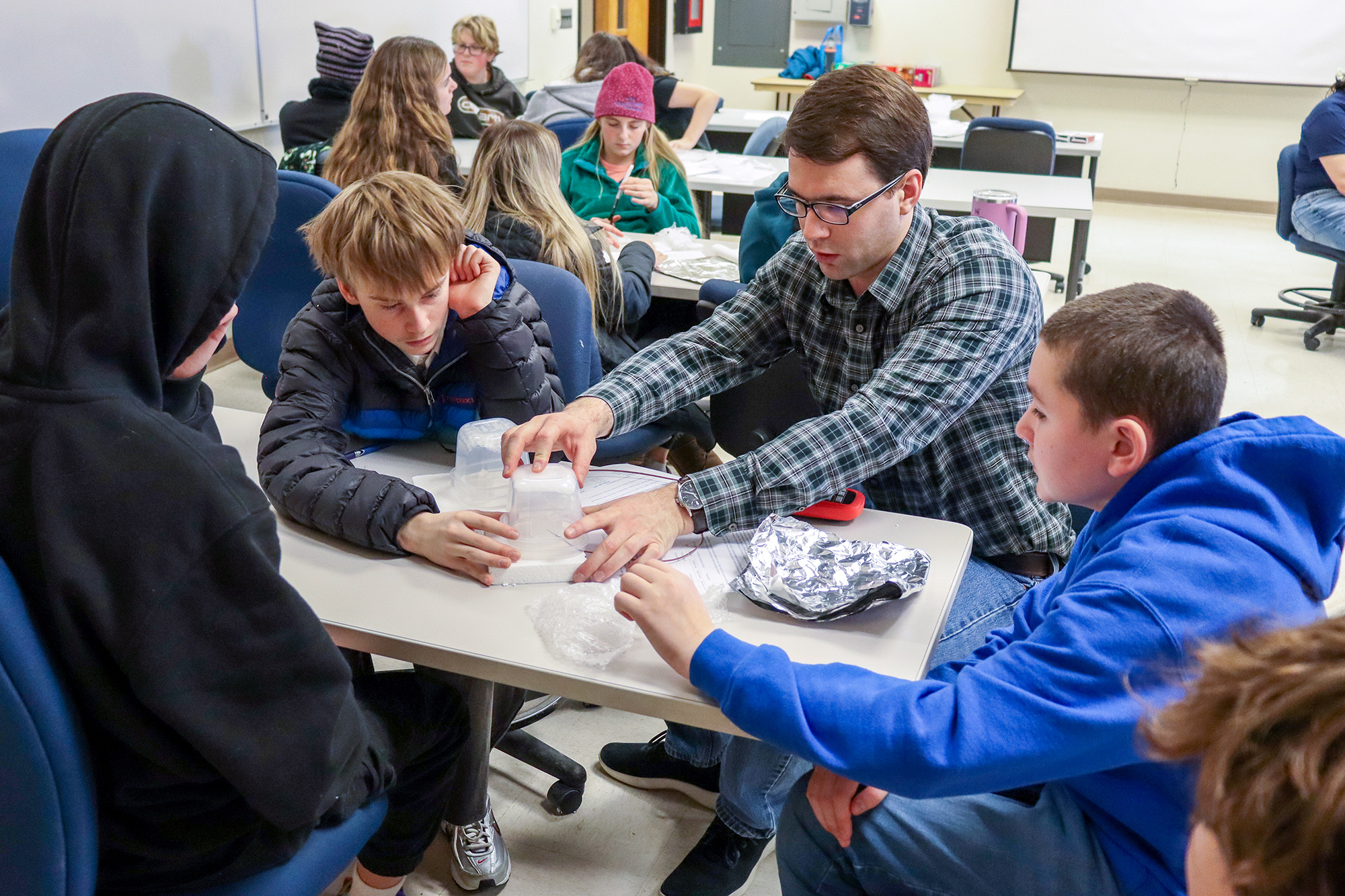
Kevin Nolan, a facilities engineer at Abbott RMDx, USM alum, and project mentor to the Telstar students, recounted the recent trip, which he helped organize. “Students were intrigued by the wind tunnel used for modeling aerodynamics and the sound-proof space used for testing biofuels in a diesel engine. They also took interest in the down-hill coaster car that was built by college students from raw materials. The group then migrated to a large classroom where the students participated in a thermodynamic lab activity with the goal of testing the insulation rating of common materials.”
Kevin Nolan, a facilities engineer at Abbott RMDx and project mentor to the Telstar students, recounted the recent trip, which he helped organize. “Students were intrigued by the wind tunnel used for modeling aerodynamics and the sound-proof space used for testing biofuels in a diesel engine. They also took interest in the down-hill coaster car that was built by college students from raw materials. The group then migrated to a large classroom where the students participated in a thermodynamic lab activity with the goal of testing the insulation rating of common materials.”
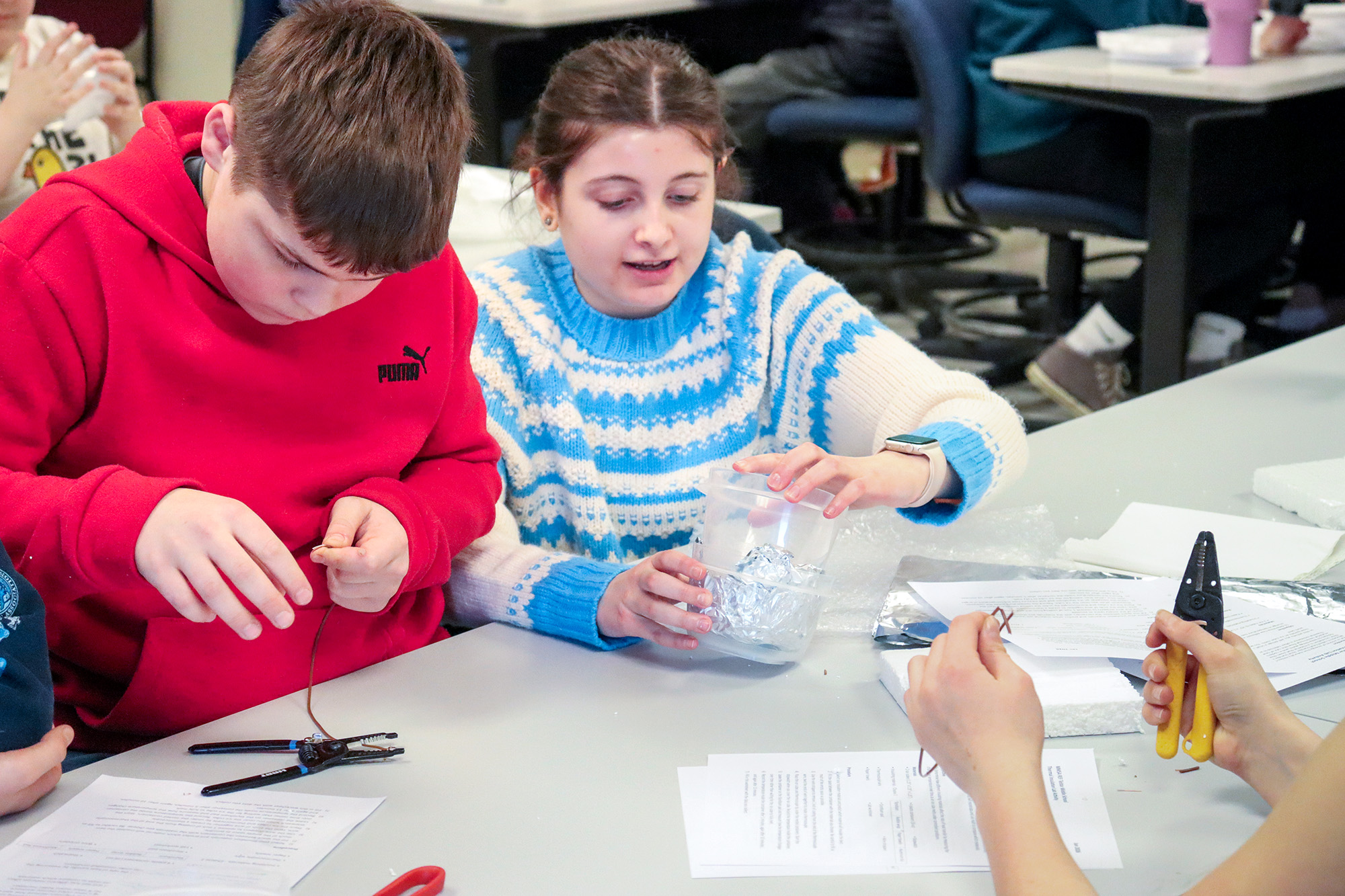
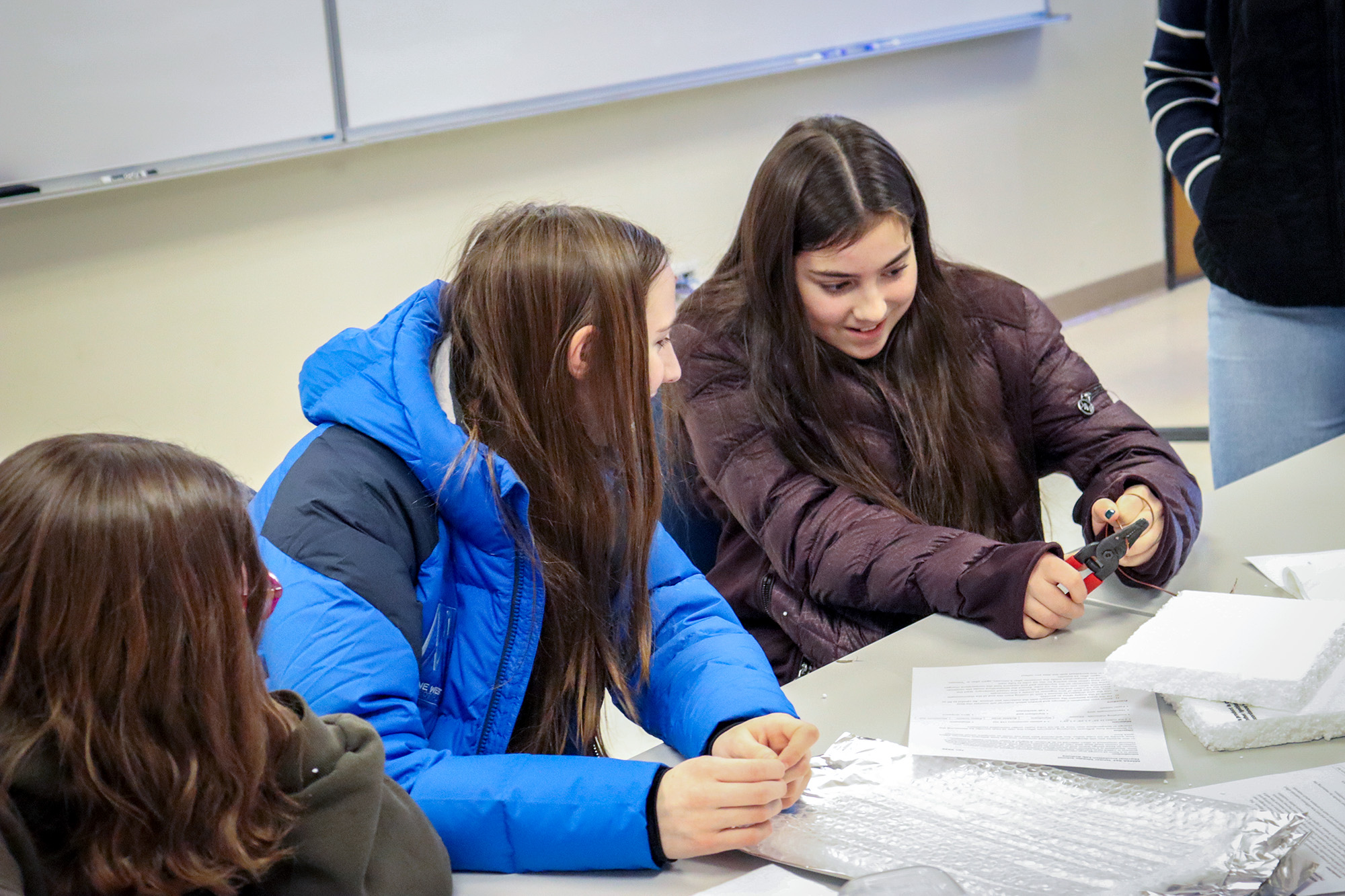
Students from Telstar Middle School work on building thermocouples from thermocouple wire, by stripping the coating from the ends and twisting the exposed wire together on one end. They used four plastic containers to make two insulated containers, by choosing between four insulating materials and stuffing the space between two nested plastic containers. Next, they allowed ice cubes to melt while covered by each insulated container and measured the temperature change over 20 minutes using the thermocouple they built with a digital reader. They performed calculations to determine which insulated container allowed more heat energy to penetrate from the “outside” air.
By connecting math and science concepts both in and out of the classroom to tangible examples from students’ local communities, this project brings STEM to life and illustrates the importance of STEM in a contextualized and meaningful way. Rural Energy Futures is entering its second year and is recruiting a new cohort of Maine teachers. To learn more, visit the project page.