Could You Power a School with Clean Energy? Maine Students Took on the Challenge
Posted on
Tom Goodwin, MMSA’s digital media specialist, shares what he learned while filming the Student Mentor Summit in his guest blog post below.
On a picturesque Friday in the fall, 13 mentors from the clean energy sector, 73 high school students and 12 educators gathered at the University of Maine in Augusta for a day of collaboration and activities related to real-world problem solving for Maine’s future. This “Student Mentor Summit,” part of the Rural Energy Futures project, was hosted by MMSA, and I was lucky enough to attend and watch the magic happen.
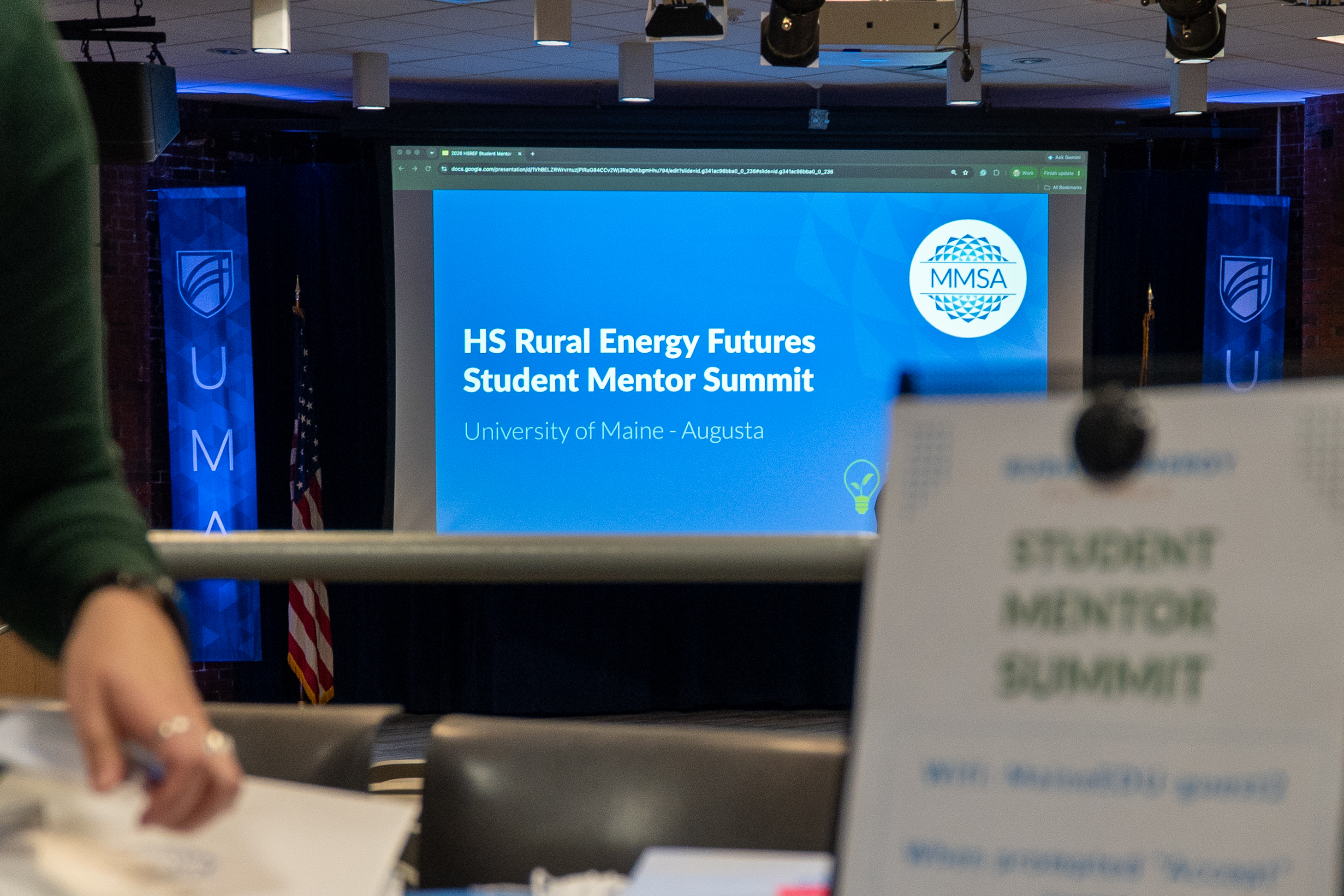
The goals? To create ways to engage with clean energy and energy efficiency in schools and to meet industry professionals so that students could see how the world works, and perhaps to inspire future careers.
The way we got there, though, wasn’t your typical “sit & get,” as my coworkers would say. MMSA prides itself on its hands-on approach to problem solving, and that’s exactly what we did.
MMSA hosted what’s called a “Design Challenge,” where small group teams were cast in roles as a clean energy startup contracted to transition a school campus from being completely grid-dependent into as close to a 100% clean, resilient energy hub as possible while navigating technical, financial, community and environmental constraints. In order to carry this out, we needed some tools…
… In typical fashion of MMSA’s STEM Specialists Ian Collins and Terence Finnegan, they casually mentioned during a planning meeting leading up to the day’s activities that they had, essentially, built a videogame for students to use. This simulator(opens in a new tab) took into consideration the constraints outlined above, and changed variables accordingly. It’s kinda like “The Sims,” but for clean energy data!
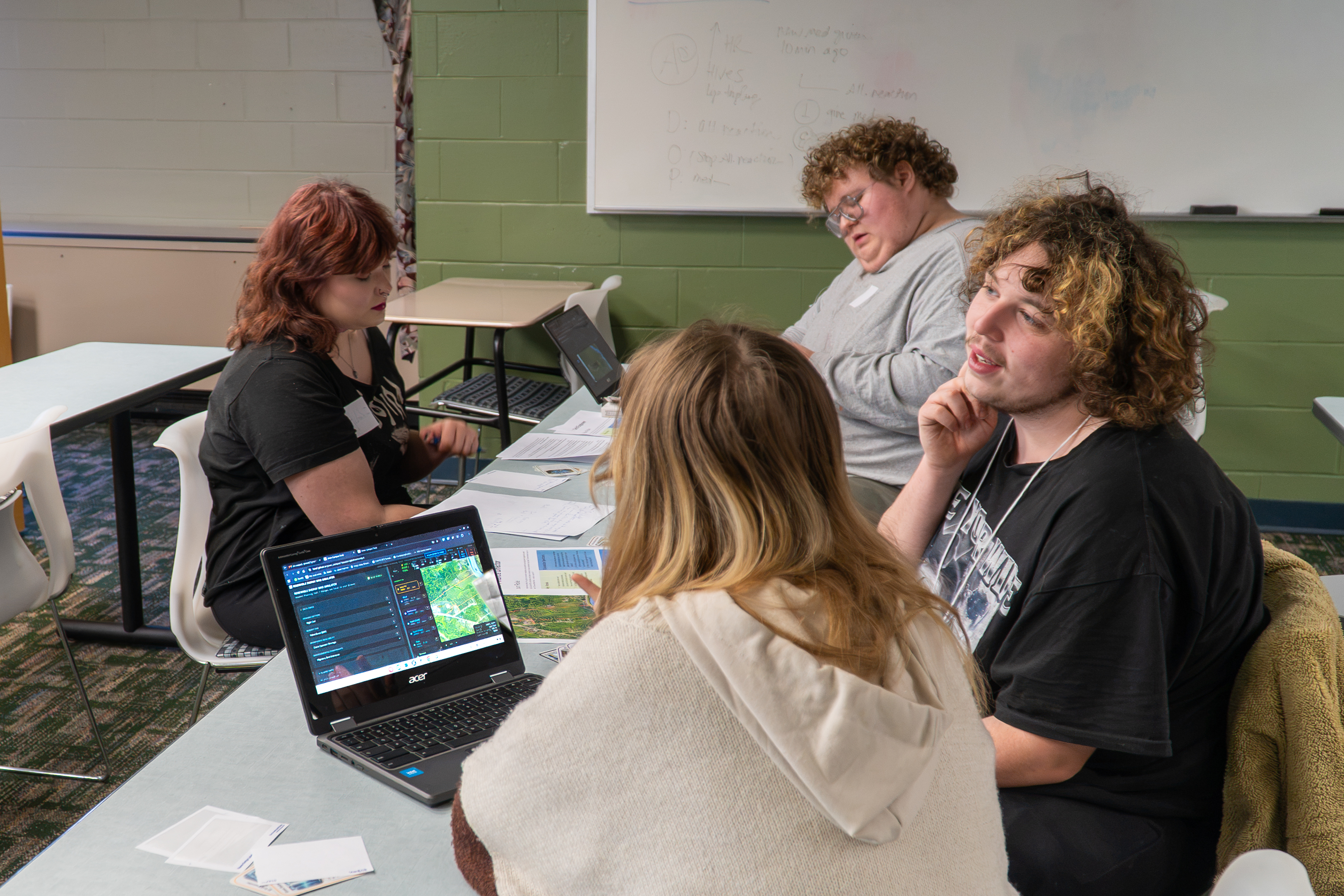
Combined with card decks citing variables, like a given school campus’ energy use throughout a typical day and examples of local ordinances that could affect the team’s ability to use certain kinds of energy generation, these student teams broke off with clean energy experts to decide what kind of renewable energy to transition their designated school map to, while staying on budget and getting as close to 100% clean energy as possible.
Pun fully intended here, the energy in the air was palpable; since Ian and Terence’s simulator and its accompanying design challenge are all rooted in realities that energy experts face right here in Maine, students were able to visualize the connections to their own communities, and were invested in finding solutions.
One example was a school campus that has a usable forest that could have been outfitted for wind power, but that town’s migratory bird ordinance meant that they needed to find a different type of energy to stay within code.
After lunch, students gave presentations in their breakout rooms about the decisions they made, and fielded questions from their teachers, peers and energy experts.
“Seeing the school groups take on our simulator challenge with enthusiasm confirmed what we thought we knew – that high school students are interested and engaged in the clean energy transition, and in particular how it affects their communities and environments. Their conversations with industry mentors got impressively nuanced and allowed for real world issues to come to the fore and inform their choices on types of electricity generation and other technologies to use.” —Terence Finnegan, STEM Education Specialist
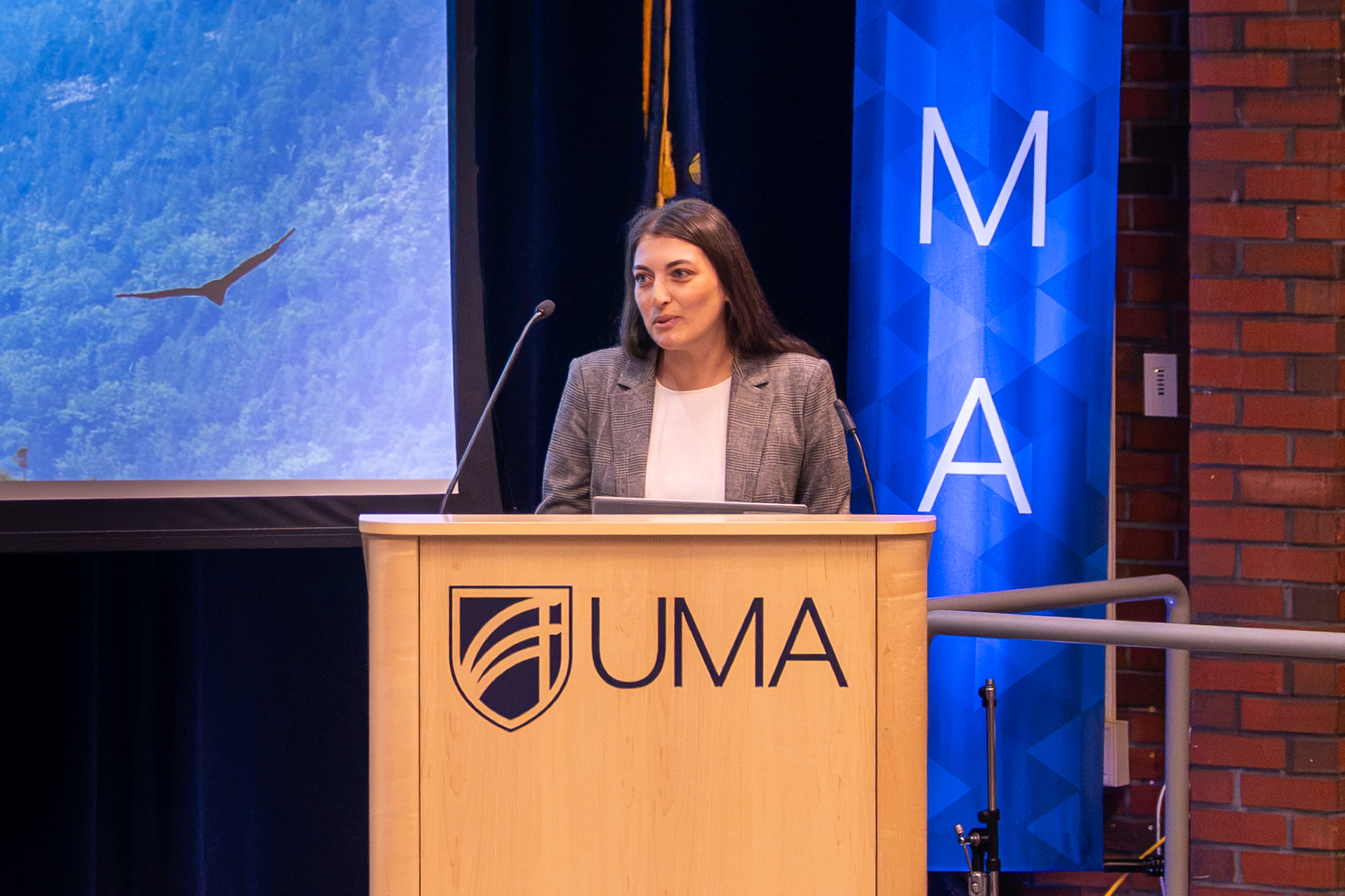
At the end of the day, everyone came back together for guest speakers Erin Scally from Passivhaus Maine(opens in a new tab) and Tagwongo Obomsawin from the Department of Energy Resources(opens in a new tab), who talked about the state of clean energy today, its goals between now and 2030, and the workforce opportunities that Maine sees and will continue to see in the future.
The whole day was inspiring. In a world where doubt and pessimism can be easier to fall back on, seeing this level of engagement and excitement about the changes that young folks are capable of makes one feel empowered for a bright future.
 Heidi Cian, Ph.D.
Research Team Lead
 Ian Collins
AI STEM Education Specialist
 Terence Finnegan
STEM Education Specialist
 Emma Carey
STEM Education Specialist
 Devan Arnold
Research Assistant
 Tom Goodwin
Digital Media Specialist