New Project Helps Understand Neurodiverse Students’ Mathematical Thinking
Posted on
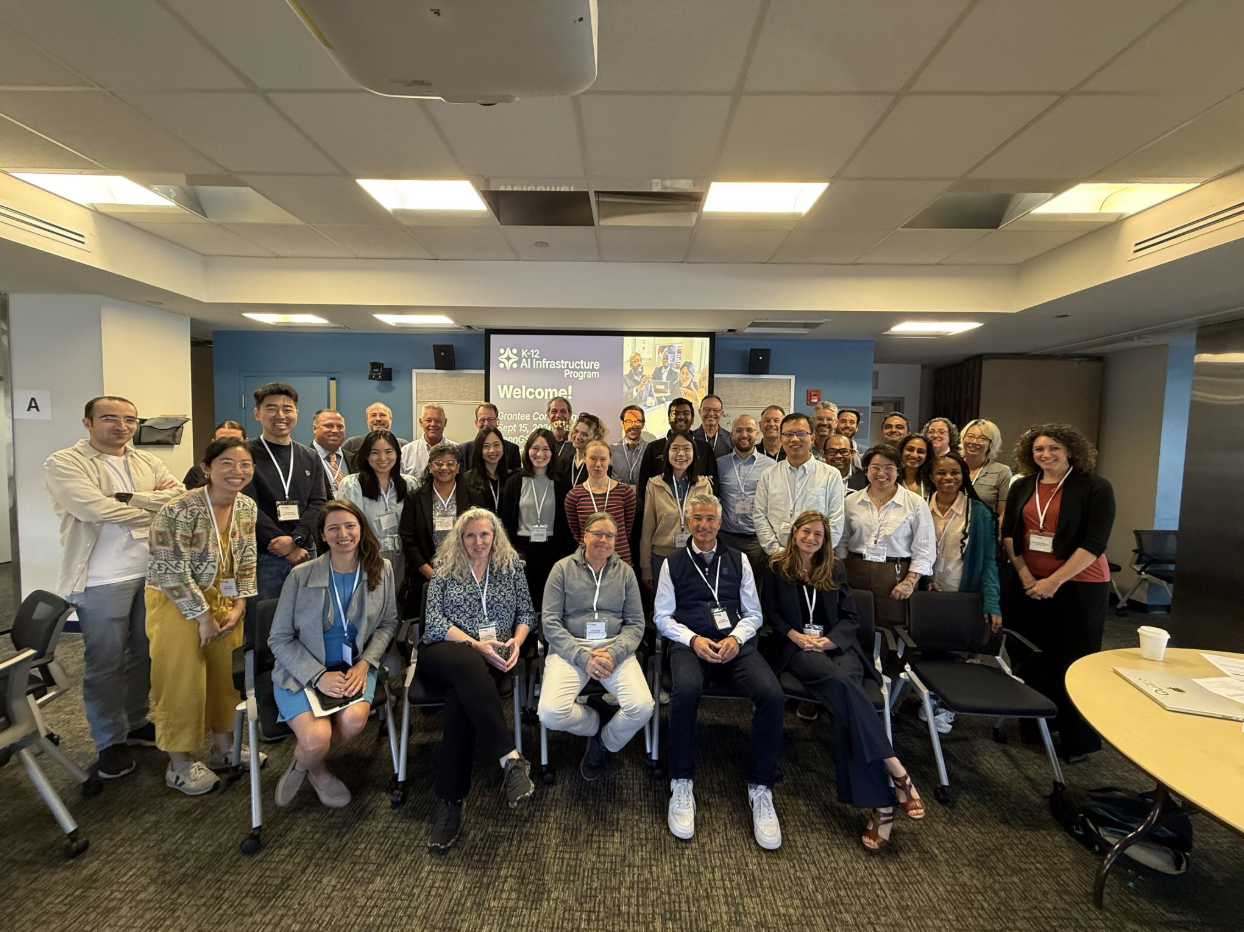
The Maine Mathematics and Science Alliance (MMSA) has been awarded funding through Digital Promise’s new K–12 AI Infrastructure Program(opens in a new tab). This initiative will focus on building a comprehensive dataset leveraging machine learning to uncover novel patterns in how neurodiverse elementary students reason mathematically, ultimately providing actionable insights to enhance curriculum design and instructional strategies.
In partnership with TERC(opens in a new tab) and approximately 40 educators nationwide, MMSA will create a carefully prepared collection of real examples of students in grades 2–5 solving and explaining math problems. The project, Learning from Student Thinking: Building a Dataset of Diverse Mathematical Reasoning from Additive to Multiplicative Reasoning, will focus on how neurodiverse elementary youths’ mathematical reasoning graduates from additive to multiplicative thinking.
This shift matters because multiplicative reasoning supports later learning in proportional reasoning, algebra, and data analysis. But it is not always easy to document what a student understands in ways that account for all of the strategies children use to show their understanding. A child may explain with words, draw a diagram, point to part of their work, use gestures, or offer an incomplete verbal explanation while still demonstrating important mathematical ideas.
“Too much of what researchers, curriculum and assessment developers, and education leaders know about neurodiverse students’ mathematical reasoning is currently confined to what can be learned from examining text-based transcripts, To truly support neurodiverse learners as they bridge the gap between additive and multiplicative thinking, we need to pay attention to the whole picture of how students engage with math. This includes the gestures, the drawings, and the unique, creative ways students express their ideas.
This project is about capturing that nuance, giving educators the insights they need to see every student’s potential and provide the precise support they need, exactly when they need it. It also celebrates that math isn’t just something you do linearly with paper and pencil. It can be more embodied and creative, and we can learn a lot about what students know by encouraging them to lean into those diverse ways of expressing themselves.”
- Project lead Heidi Cian, MMSA’s Research Lead
MMSA’s project will document these real moments of student thinking in a format that researchers and technology developers can learn from. Participating teachers will use MMSA’s established Math Fluency Interview Tools and Trajectory (mFITT) protocol to talk individually with students as they solve math tasks. With family consent and strong privacy protections in place, the project team will turn those interviews into a secure, de-identified dataset.
The publicly available portion of the dataset will include edited transcripts of student explanations, reconstructed versions of student drawings and written work, and teacher observations about how students communicated their ideas and what supports were used. Researchers will also label key features of each student’s approach, like whether a student is relying on additive strategies, beginning to reason multiplicatively, or coordinating a drawing with an explanation.
Our goal is for this work to give researchers, assessment developers, and education technology teams better examples of the kinds of evidence teachers use to understand student thinking. In the future, those examples could help create tools that identify patterns in student work, help teachers notice emerging ideas, or offer useful instructional information.
Digital Promise: New Grantees Awarded by the K-12 AI Infrastructure Program(opens in a new tab)
This initiative was made possible through the generous financial support of Digital Promise through the K-12 AI Infrastructure Program.
For more details on this project, visit the Learning from Student Thinking web page.
 Heidi Cian, Ph.D.
Research Team Lead
 Cheryl Tobey
STEM Education Specialist