Spotlight on Alex Brasili: From the Maine Coast to Statewide Change
Posted on
Long before Alex Brasili built a career around environmental education, research, and statewide STEM initiatives, she was a kid turning every patch of woods, stream, and backyard into a place to explore.
“I grew up in the suburbs, so any small patch of forest or stream became an opportunity to investigate something,” Alex said. “The natural world has always been grounding for me, but it has also been an endless source of questions.”
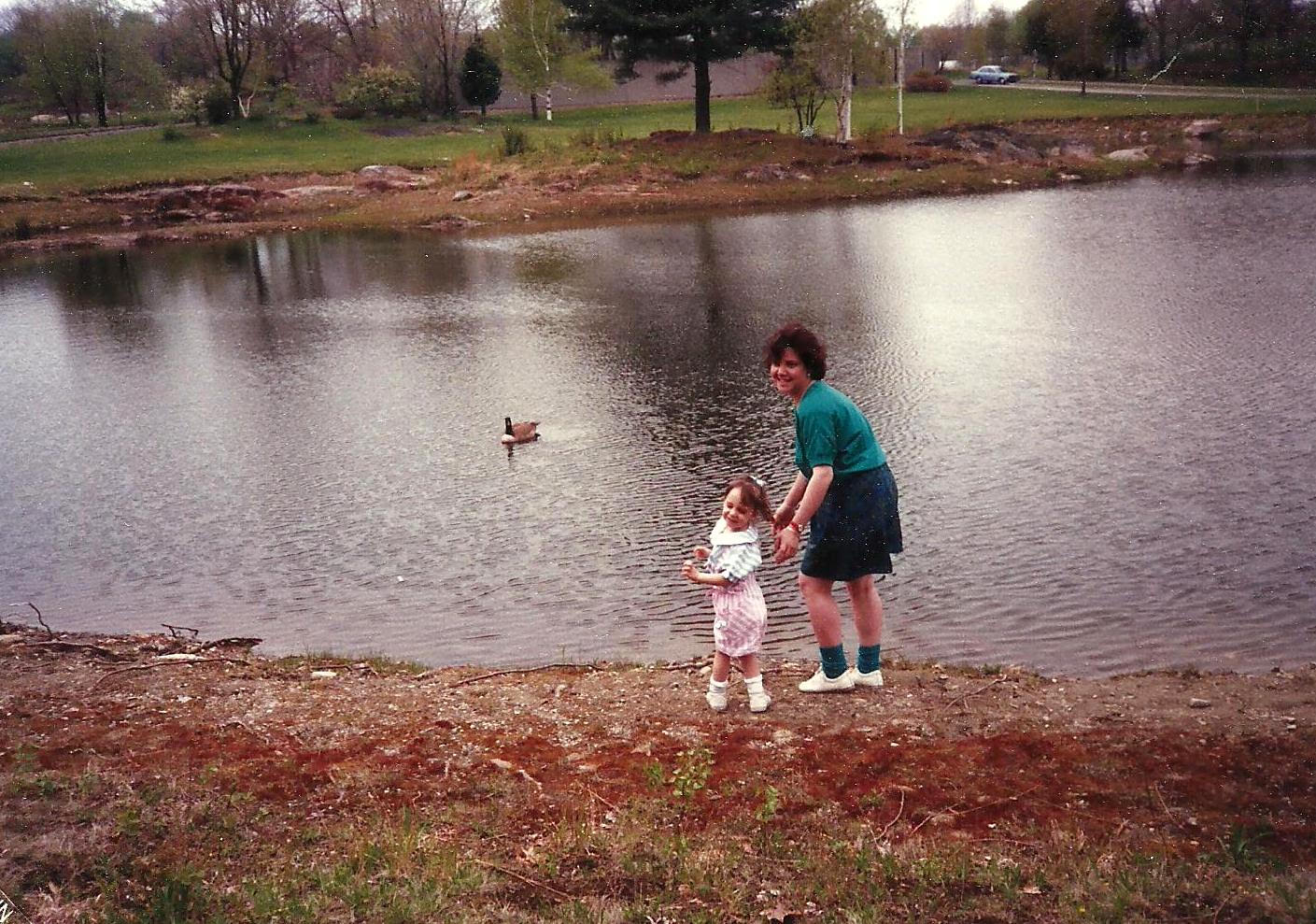
That curiosity followed her to Oceanology camp, biology courses, field research along the Maine coast, and eventually a career helping others engage with science and the outdoors in meaningful ways.
Her path into education began with an unexpected turning point.
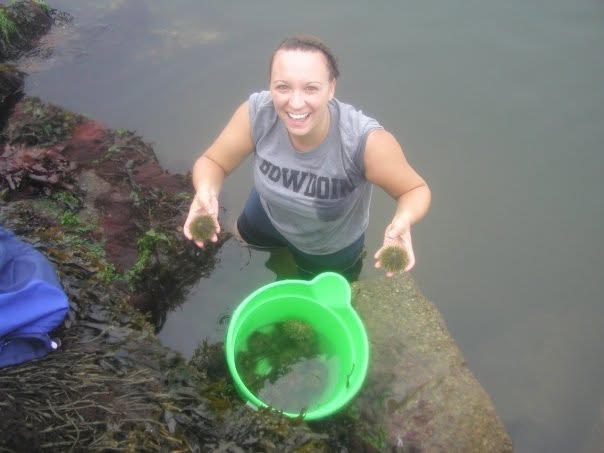
As a college junior, Alex studied sea urchin growth at Bowdoin College’s Coastal Studies Center, collecting urchins along the coast and tracking more than 500 individually tagged animals. One day, she showed a group of high school students around the lab and shared the science behind her research.
“I realized that while I appreciated doing the scientific research, what I really loved was communicating it to other people,” she said. “That was the moment that redirected me toward education.”
Nearly a decade ago, Alex joined MMSA in STEM education research. Over time, she took on larger roles and began leading projects of her own, including the Census of Community-Based Environmental Learning(opens in a new tab).
Since its first statewide data collection in 2019, the Census has helped Maine better understand where outdoor and environmental learning is happening, what educators need, and where more support is needed. Its findings have informed funding decisions, policy conversations, and resources for educators.
“The Census has been incredibly rewarding because the research has translated into real change,” Alex said.
One example came from educators’ calls for more support around climate education. Census findings helped inform the case for legislation that established Maine’s Climate Education Professional Development Grant Pilot Program.
For Alex, that influence is rooted in how the research is conducted.
“We’ve always tried to make the process community-informed and relational,” she said. “We want educators to help shape what we’re asking and what we’re trying to understand.”
That philosophy also helped shape Teach ME Outside(opens in a new tab). Following the first Census, MMSA joined the Maine Environmental Education Association(opens in a new tab) and the Nature Based Education Consortium(opens in a new tab) to turn findings into professional learning, networking opportunities, resources, and tools for Maine educators.
“We didn’t want those recommendations to sit on a shelf and collect dust,” Alex said.
At the center of the work is a larger vision: every Maine student should have access to high-quality environmental learning opportunities.
“Maine has incredible pockets of innovation in environmental education,” Alex said. “A big part of this work is connecting people so they can share ideas, resources, and solutions instead of feeling like they’re working in isolation. We’re not going to reach every student without learning from one another.”
Today, as MMSA’s Programmatic and Research Director, Alex spends more of her time shaping strategy, supporting teams, and helping others grow into leadership.
“I’ve loved seeing other people step up and bring their own expertise to this work,” she said. “My role now is often to provide the history and context, establish the guardrails, and then give talented people the space to take an idea and run with it.”
Her influence continues beyond MMSA. Alex serves on the Guiding Council for the Maine Green Schools Network(opens in a new tab), helping guide efforts to create healthier, more energy-efficient and climate-resilient schools. In 2026, she was also named an Honorable Mention Awardee for Herring Gut Coastal Learning Center’s Phyllis Wyeth Visionary Award(opens in a new tab), bringing her career full circle after previously serving as an Island Institute Fellow at Herring Gut.
What began as curiosity about the natural world has grown into a career devoted to turning research into action, connecting people across Maine, and expanding opportunities for students to learn from the world around them.
Help shape what comes next for environmental learning in Maine
The 2026 Census of Community-Based Environmental Learning is now open. Educators, administrators, organizations, and others connected to environmental learning in Maine are invited to share their experiences and help inform the next chapter of this work.
Take the 2026 Census of Community-Based Environmental Learning(opens in a new tab)
 Alexandria Brasili
Programmatic and Research Director